No different to other colloquial registers of English: stressed you is “you”, unstressed you is “ya”.
That’s how Leonard Cohen did all his rhymes with Hallelujah, after all: http://www.azlyrics.com/lyrics/l…
No different to other colloquial registers of English: stressed you is “you”, unstressed you is “ya”.
That’s how Leonard Cohen did all his rhymes with Hallelujah, after all: http://www.azlyrics.com/lyrics/l…
I finally worked this out, by reading half of Ancient Greek accent – Wikipedia. (Reading the other half confirms it, but I’m still proud of myself.)
The answer is: the second element if acute, the first if circumflex.
Let’s take this slow.
The explanation of the distinction between acute and circumflex in the Wikipedia article is based not on contours on a vowel, but on high/low contrast on Morae (what a long vowel has two of, and a short vowel has one of). And I gotta admit, that’s the first time an explanation of Greek accent has made sense to me.
So. Let’s ignore grave. Short vowels can only take an acute. That is a high pitch on a single mora:
έ = ˥e.
A long vowel can take an acute. That is interpreted as a high pitch on the second mora:
ή = ɛ˥ɛ
μή = mɛ˥ɛ
You’re going from neutral pitch to high pitch. That will of course sound like rising pitch.
A long vowel can instead take a circumflex. That is interpreted as a high pitch on the first mora:
ῆ = ˥ɛɛ
In context, a circumflexed vowel is a neutral pitch mora, followed by a high pitch mora, followed by a neutral pitch mora; e.g.
καλῆτε = ka.lɛɛ.te
That will sound like a circumflex: rising then falling.
So. Diphthongs involve two short vowels. (There’s also long diphthongs, which are the things with iota subscripts.)
Two short vowels are two morae.
So it’s the same. αί has high pitch on the second mora (i.e. second vowel):
αί = a˥i
αῖ has high pitch on the first mora (i.e. first vowel):
αῖ = ˥ai
Now, your question was, if we use contour tones rather than pitch peaks, how do we transcribe it in IPA?
At that point, I myself would prefer to just go with convention, and put the contour tone symbol on the second letter, because that’s what Greek does. But the point here is that the contour tone, in both cases, starts on the first vowel = first mora. So arguably putting it on the first vowel is more accurate.
Didn’t know about the Quora Meme Page, but it’s been inactive for three years anyway.
The Memes of Production blog has just started up. Contributions welcome!
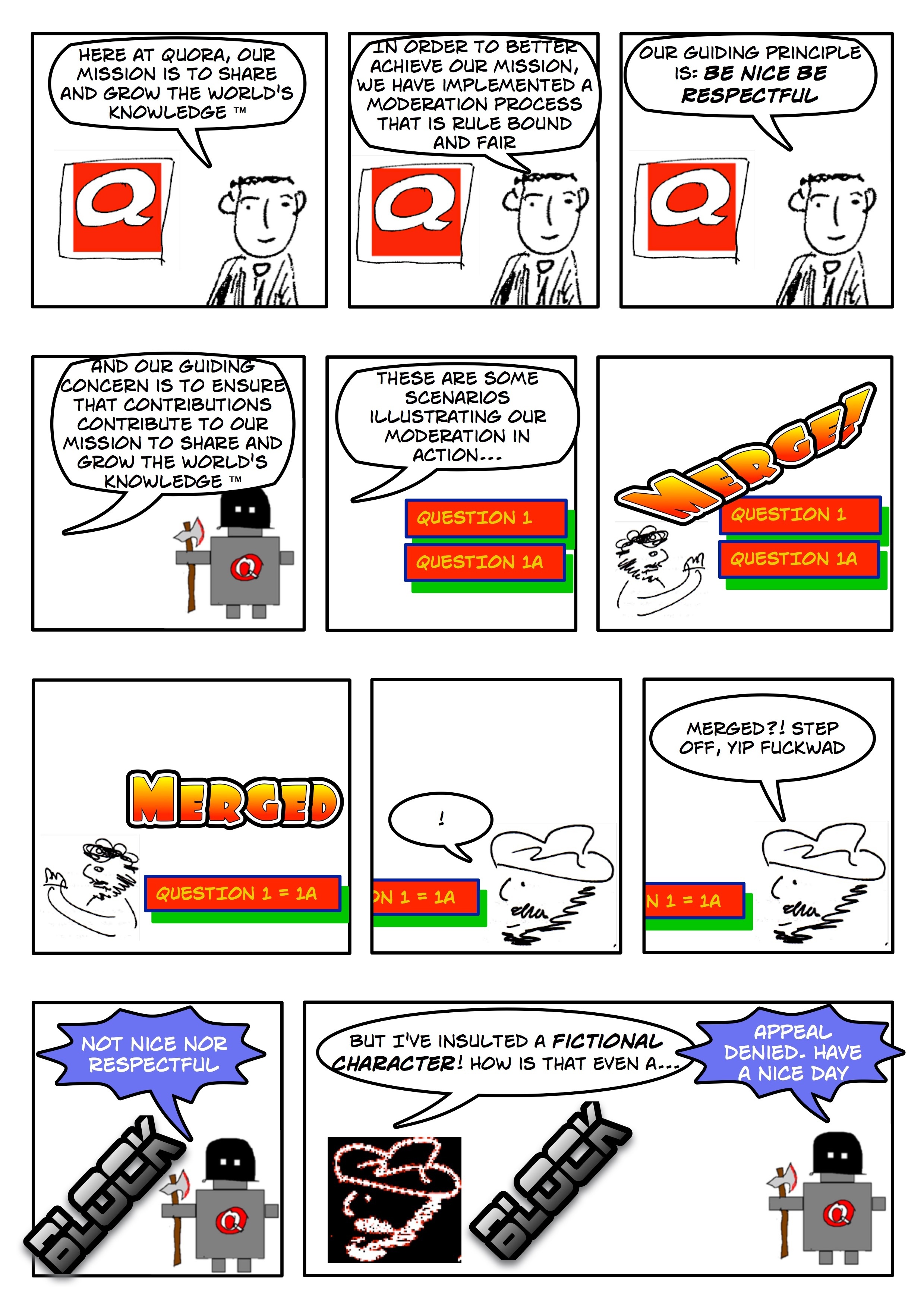
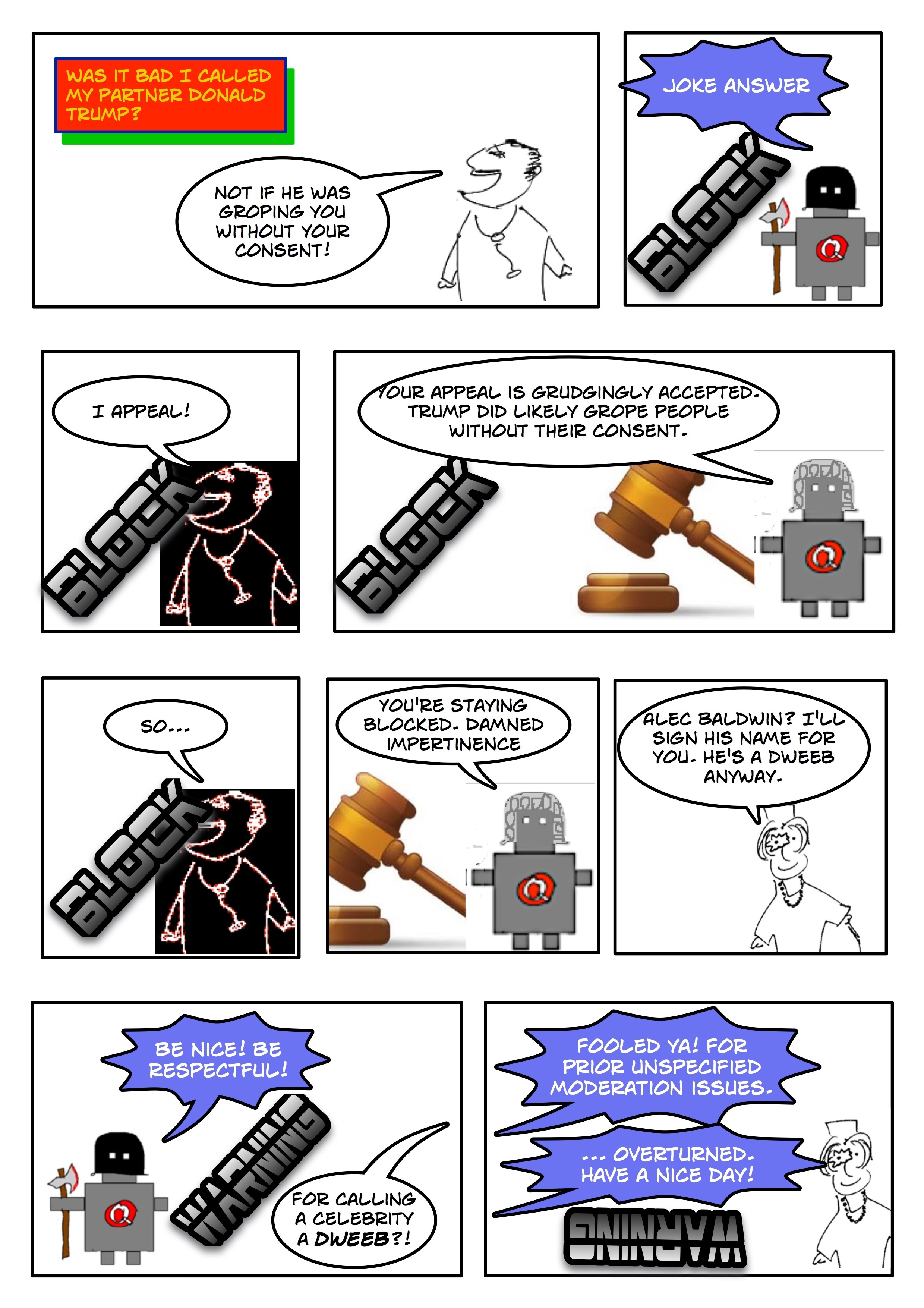
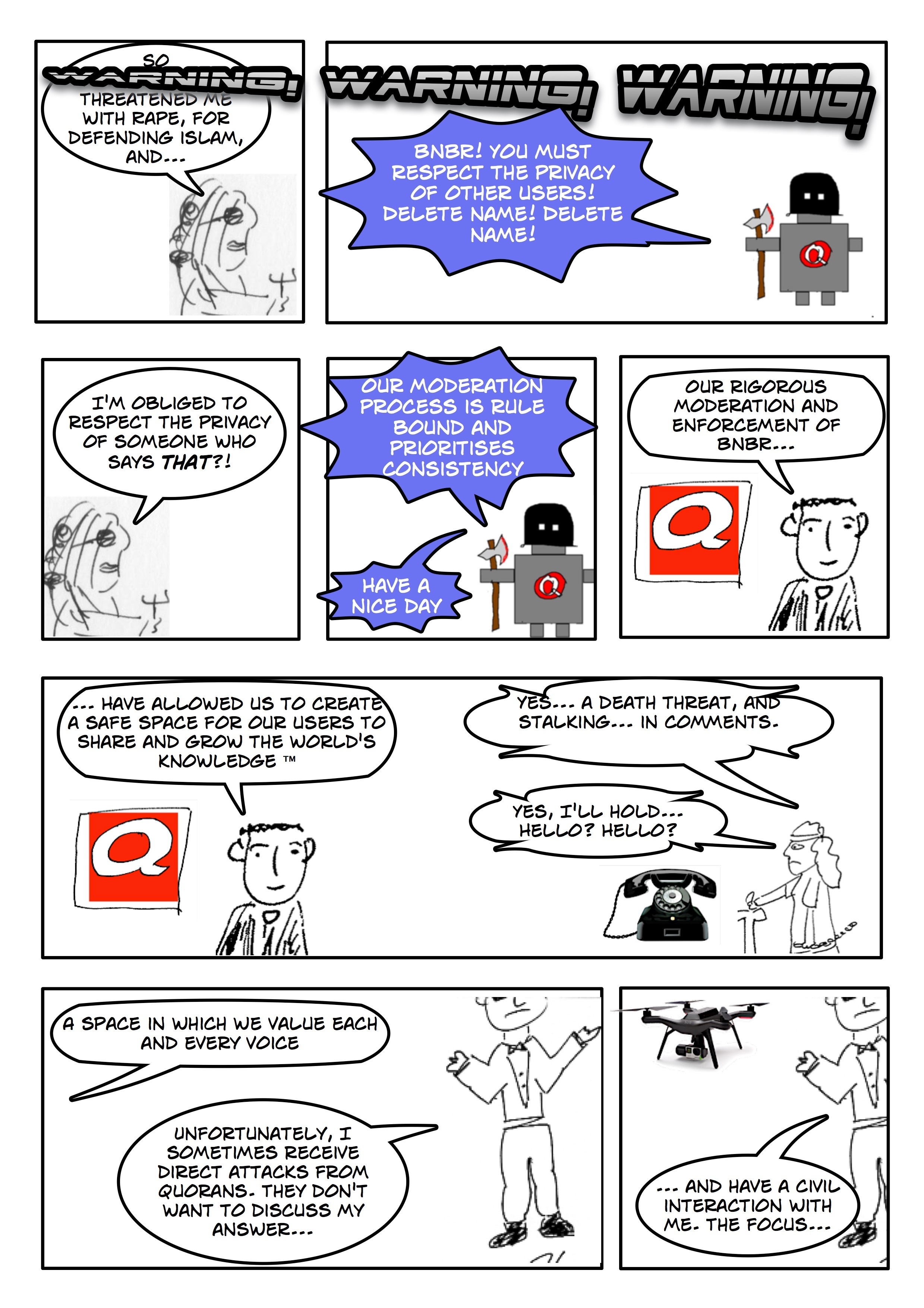
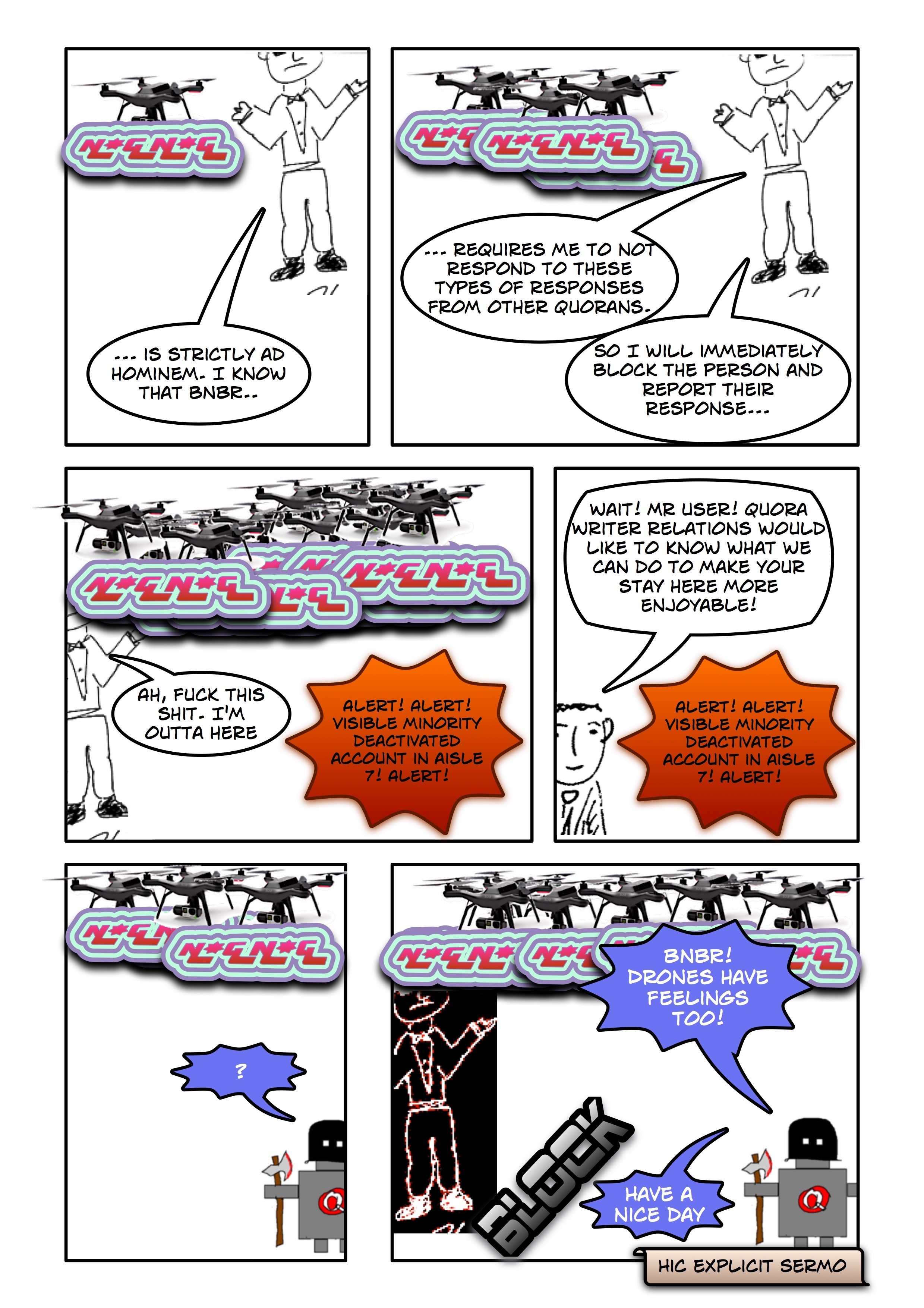
Not quite in the Rage Comic genre, but I’m rather proud of what I came up with as a lowercase rage comic in this post:
I gave a sketch here: Nick Nicholas’ answer to What are the pros and cons of the Erasmian pronunciation?
Erasmian is an early reconstruction of Ancient Greek. Compared to our current reconstruction, it’s not as distant from modern Western European languages, and it gets modified for ease of teaching in different countries.
Erasmian as taught tends to make the following concessions. (Happy to be corrected.)
- Usually stress rather than pitch accent
- Often fricatives rather than aspirated stops
- Nativisation of diphthongs
- Some distortions in the German version
- Even more distortions in the French version
Assume bug. Happened to me too.
Presumably related bug: Views are decreasing! by Vishal Katyal on Rage against Quora. Views stats dropped on 18 Dec, reported on the 18th.
Where are my views? by Morgan Evans on Rage against Quora: disappeared on the day.
Pegah is an IT student, in her early twenties, living in a town in Iranian Azerbaijan. (She’s mentioned it here, and it wasn’t Tabriz, but I’m not doxing her. Besides, Quora Search.) She is a metalhead, she by her own admission finds it difficult to smile for photos, she has genocidal urges against men, and she is a… no, it would be inconceivable for her to be an unbeliever: she is a potato-chip worshipper.
(From one of her posts, saying that you can be a potato-chip worshipper, and the mullahs will leave you alone in Iran, so long as you don’t challenge their authority.)
I met Pegah via our mutual friend Lyonel Perabo, who has his own… fantastical account of Pegah as another response here.
Pegah is likely the best known Iranian on Quora. Certainly the best known to me. And Pegah plays a valuable role on Quora, of explaining Iranian and Azeri attitudes, Iranian daily life, Azeri and Iranian culture, to outsiders.
But to reduce Pegah to an Iranian, or an Azeri, or an explainer, is to insult her, and I will not. Not because she’ll threaten me, whatever our banter might indicate. But because I respect her. And because we’ve had wonderful exchanges here, trying to work out how similar our respective cultures are; swapping YouTube videos, quoting poems, and recognising the joy it gave us to share them with each other.
Pegah’s name means Dawn, but she’s not a daybreak; she’s a burning noon. She is passionate, and she is acerbic, and she is proud. It’s the pride that I admire most, all the more because it is tempered through her cynicism. She is proud to be Torki, and proud to be Irani, and proud to be a metalhead, and proud to be a potato-chip worshipper (or whatever that is code for).
And she would be a proud, burning noon wherever she was brought up. Being a member of a large minority in the Islamic Republic of Iran might give her cynicism an extra edge; but she’d be both proud and cynical (a potent combination) wherever she was brought up.
We had an exchange maybe last month, where I marvelled that we got along so well, when a century ago she would be my sworn enemy as a Greek; and Pegah protested. Surely we could have been common enemies against the Ottoman Empire.
No, Pegah, I know how religious communities within the Ottoman Empire worked. We massacred and banished our own fellow Greeks for being Muslims, after all, and they weren’t even Torki.
But thank you for suggesting we should have been allies. I would have been honoured to have someone as proud as Pegah as a sworn enemy then. And I’m honoured to count her among my friends now.
(You need to post more, though, Pegah. I miss your voice here.)
Like others, I’ve only noticed it this past couple of days.
I get questions from A2As, from my feed, and from questions that people I follow answer. I don’t anticipate using it that much; my followees are pretty disparate, and the people I share interests with are not shy about A2A’ing me.
Feh. Screw that guy.
I wrote why on my website, something like 20 years ago (ignore the update date): Anti-Chomsky: English. I was somewhat aghast around 2000, when David Horowitz got in touch with me, asking for permission to quote me.
I don’t spend a lot of time thinking about him. (Chomsky, I mean. But not Horowitz either, for that matter.) But:
Start with Byzantium: Orthodox Christianity was the state religion, and heterodoxy was deemed treason. Jews and Muslims were tolerated in Byzantine Law as second class citizens; heretical Christians got the sword.
In the Ottoman Empire, that continued with the Rum millet: Greek Orthodoxy defined the nation of Romans, which was considered to include Greeks. Catholicism was a minority presence in Greece, and Greek Catholics were deemed not Rum (Romioi, Romans), but Frenk (Frangi, Franks).
When the Modern Greek State was founded, Orthodoxy became the state religion quickly; and it was considered coextensive with Greek national identity. That has allowed it a hegemony that Western Europeans are uncomfortable with; the Church of Greece gets veto, for example, on building places of worship for any creed, which is why there still isn’t a mosque in Athens. Is the 180 Year Wait for an Official Mosque in Athens Finally Over?
Catholics were ignored, and they were small enough in numbers that they could be ignored. Muslims were Turks as far as everyone was concerned, whatever their ethnicity (Turkish, Gypsy, Greek, or Albanian). Armenians were foreigners. There was some Protestant missionary activity in Greece; the Ottomans considered them a distinct millet, and the Greeks… well, the Greeks ignored them too, just like they ignore Jehovah’s Witnesses.
So, partly history, partly construction of national identity, partly privileged role of the state religion.