Does the phrasing of non-trolling Quora questions influence the negative/positive tone and direction of your answers? If so, how?

If the question is not trolling but is still polemical, and I disagree, then part of my answer will be dedicated to dismantling its assumptions. And I might make an aside at the OP.

But there have been many seemingly silly questions, for which I have given serious answers. I like to treat them as springboards.

How do you translate “blockchain” and “bitcoin” to Latin?

This won’t be good, for the reasons Alberto Yagos said.

The Greek for bit is: Bit – Βικιπαίδεια. Of course. There is a Hellenic coinage recommended by the Greek Standards Organisation: δυφίο dyphio[n], from dyo “two” and psēphion “digit”. The Ancient Greeks didn’t do portmanteaux, which is what this is; but if you want a Hellenic bit, that’s what’s on offer.

So you *could* go with dyphionomisma, where nomisma is a coin.

But honestly, Bitcoin shouldn’t be translated, not only because it is anachronistic, as Katharina Sikorski argues, but because it s a proper name, not a generic term.

Blockchain? I would do back to literal rendering. Chain of ledgers would be Catena Calendariorum—where a calendarium was not originally a calendar, but a ledger. You could say that the calendarium is virtual, but really, Catena Calendariorum is plenty long already.

How often do you use the “Asked By People You Follow” feature when answering questions on Quora?

Like others, I’ve only noticed it this past couple of days.

I get questions from A2As, from my feed, and from questions that people I follow answer. I don’t anticipate using it that much; my followees are pretty disparate, and the people I share interests with are not shy about A2A’ing me.

What is your opinion of Noam Chomsky?

Feh. Screw that guy.

I wrote why on my website, something like 20 years ago (ignore the update date): Anti-Chomsky: English. I was somewhat aghast around 2000, when David Horowitz got in touch with me, asking for permission to quote me.

I don’t spend a lot of time thinking about him. (Chomsky, I mean. But not Horowitz either, for that matter.) But:

  • Chomsky was necessary in the 1960s, for introducing the study of syntax into linguistics.
  • Chomsky had a destructive influence on linguistics, by creating a monoculture of linguistic inquiry in the American East Coast and Europe.
  • The things Chomsky & co find interesting about language, I don’t. In fact, noone in Australia does, outside of the University of New England.
    • Chomsky came to town in 1995 and visited my department; I was a vacation scholar at the time in Sydney, and saw him there instead. All my profs had lunch with him. And they couldn’t think of a thing to say to him. They were fieldwork linguists, after all.
  • His theory of language sounds tenuous to me. It may not lack explanatory adequacy, but it certainly lacks explanatory oomph.
  • Politically, he says the kind of things that comes as a revelation to an engaged 20-year old. And, regrettably, attracts the kind of cult of personality that 20-year olds are prone to: there’s a graffiti mural of him on my way to work. To a jaded 40-year old, they’re a mix of “yeah, so what?” and “God, could you be any more naive?”
  • As a polemicist, both in linguistics and politics, he’s an objectionable so-and-so, who defines his interlocutors away.
  • As a writer, he’s an obfuscator. The Chomskybot has a lot more.

Why does the Greek Orthodox Church have religious hegemony in Greece?

Start with Byzantium: Orthodox Christianity was the state religion, and heterodoxy was deemed treason. Jews and Muslims were tolerated in Byzantine Law as second class citizens; heretical Christians got the sword.

In the Ottoman Empire, that continued with the Rum millet: Greek Orthodoxy defined the nation of Romans, which was considered to include Greeks. Catholicism was a minority presence in Greece, and Greek Catholics were deemed not Rum (Romioi, Romans), but Frenk (Frangi, Franks).

When the Modern Greek State was founded, Orthodoxy became the state religion quickly; and it was considered coextensive with Greek national identity. That has allowed it a hegemony that Western Europeans are uncomfortable with; the Church of Greece gets veto, for example, on building places of worship for any creed, which is why there still isn’t a mosque in Athens. Is the 180 Year Wait for an Official Mosque in Athens Finally Over?

Catholics were ignored, and they were small enough in numbers that they could be ignored. Muslims were Turks as far as everyone was concerned, whatever their ethnicity (Turkish, Gypsy, Greek, or Albanian). Armenians were foreigners. There was some Protestant missionary activity in Greece; the Ottomans considered them a distinct millet, and the Greeks… well, the Greeks ignored them too, just like they ignore Jehovah’s Witnesses.

So, partly history, partly construction of national identity, partly privileged role of the state religion.
Why is Albanian so different from other European languages?

To expand on Edmond Pano’s answer:

Indo-European languages are not all that similar to each other. That’s why it took so long to establish the family. (It was much more obvious in Classical times, but people in Classical times weren’t paying attention.) The level at which laypeople can tell similarities is at the branch level.

So Danish isn’t from outer space if you’re aware of German, and Spanish isn’t from outer space if you’re aware of Italian, and Czech isn’t from outer space if you’re aware of Bulgarian. (Notice I didn’t mention French and English, which are still quite odd.)

But an isolate branch like Albanian or Armenian is going to stand out, because there’s no immediately close language. In fact the only reason why we don’t say that about Greek more is that people at large are already a little familiar with Greek, because of its cultural influence.

If you’re Greek or Macedonian, however, and leaf through an Albanian grammar, it doesn’t look different at all: the Balkan Sprachbund has made its grammar very close to its neighbours. And if you work out the sound changes, it’s surprising how much of the Albanian vocabulary is chewed-up Latin.

Answered 2016-12-22 · Upvoted by

Emil Perder, Ph D Linguistics, Stockholm University and

Steve Rapaport

Thank you to the manumitted gnomes

Not a request, other than a request that we show appreciation to the manumitted gnomes, such as Christopher VanLang, who have permission to reorg locked topics, and act on requests here to do.

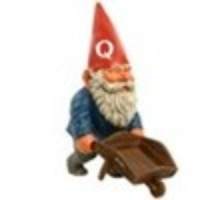
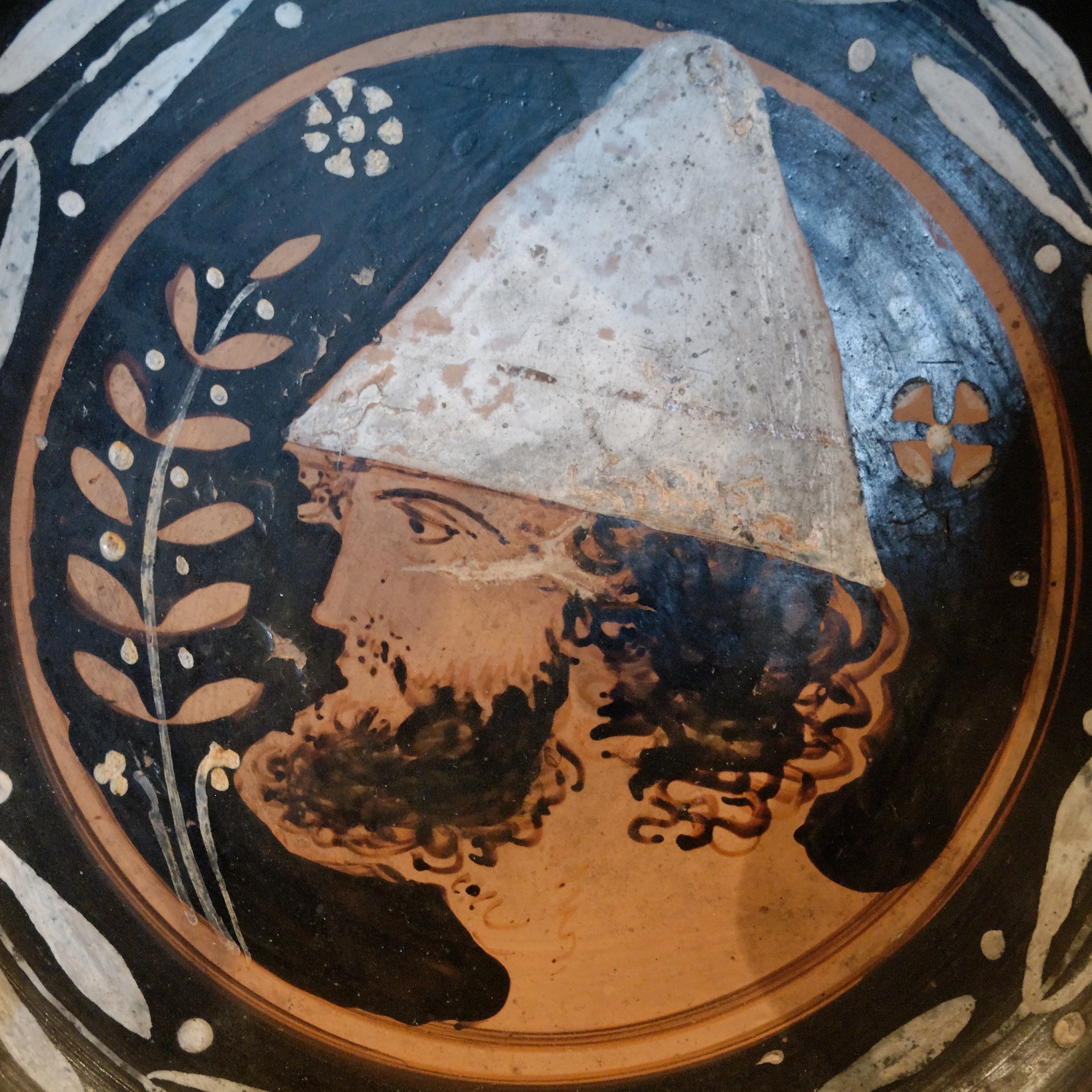
Thanks, manumitted gnomes! It’s not a coincidence that the Pileus (hat), which manumitted slaves wore in antiquity, looks like a gnome cap:

File:Man pilos Louvre MNE1330.jpg – Wikipedia ; see also Phrygian cap – Wikipedia.

If you saw someone asking the same kind of question over and over again, would you automatically write them off as a bad person?

Hahaha! Hahaha!

You know, OP, I was about to post the same question! Because I too have been deluged this week by:

My inclination would be, yes, because we get it, already, and they’re also eliciting the same response, and templated questions are annoying after you see the second instance.

And yet! And yet those questions come from the divine, amusing, and highly intelligent Ms Carter Clock herself, Annika Schauer:

I will not write off Annika qua Annika. So that has been a lesson, to withhold hasty judgement. It’s maybe even the same lesson she was getting at with those questions.

Still don’t like the questions though. 🙂

Was Napoleon Greek?

Andrew Baird’s block on me means I cannot reply to commenters to his answer, either.

So, Bill Killernic: Laure Junot, Duchess of Abrantes was the person who circulated the notion that Napoleon was Greek. She claimed that Napoleon had proposed to her mother, Panoria Stephanopoli, a Corsican Greek.

Her claims are often repeated by flattered Greeks, but they are not seriously accepted by any historian. I’ve been through all the baptismal records of the Greek community in Corsica, because I’ve had a research interest in it (and published a few papers on it): there was never a Kalomeros family there, and Kalomeros doesn’t really make sense as a Greek surname anyway.

What is true is that the Greek community was an elite in Ajaccio at the time of Napoleon’s birth, and one of the Stephanopolis, Demetrius, sponsored young Napoleon to go to military academy at the age of 10. (See my paper at http://www.24grammata.com/wp-con…, p. 40)

What could be a good idea for a one act play based on the Ottoman Empire?

The fratricidal free-for-all of the Ottoman Interregnum. What makes brothers gladly slice each other’s throats: rich opportunity for psychologising there.

I’m sure there’s something tragic about how Abdul Hamid II lost his empire from under him.