The Lupine Commandments

Gigi J Wolf’s answer to What are some things you will never do on Quora?

Comment, Michael Masiello:

You’re a better man than I, Charlie Brown. I break so many of these lupine commandments that I feel every inch a sinner.

Forgive me, La Gigi, for I have sinned.

  • I’ll never post another meme.

I did it once without even thinking it, and them removed it before being nabbed by the meme police. But I unrepentantly post memes that are actually not gratuitous, but are discussed in the question (such as a meme of Obama as an action hero, proving that at least some American attitudes had changed).

  • I’d post a meme and cartoon every single dang answer if I could, but I don’t want my answers collapsed.

I’d post a cartoon of my own making to every single answer if I could be bothered, but drawing and scanning is a little too much of a hassle. Let alone actually getting the shape of people right.

  • I’ll never post a selfie of me without makeup, or when I just wake up. Quit asking.

Guilty. I have in fact posted one or two selfies without makeup. Though almost all photos are from an external party.

  • Or while I’m on the potty. How would you like that?

Not one of my kinks. I’m ok, thanks.

  • I’ll never use profanity, or even say things like ‘potty’.

… Bugger.

  • I’m never going to go into graphic detail about sex.

I will never go into graphic detail about sex under my own name, anyway…

  • I’m never going to fink and write about the rotten things someone did to me.

I don’t name names, unless they’ve blocked me, but I do try and behave here within BNBR. I do hold grudges, but I haven’t been strongly enough motivated to dish on them here.

  • I don’t think I’ve ever been very critical of Quora here. Unless their definition varies greatly from mine. Or unless Alec Baldwin is a mod.

I’ve just dedicated a whole blog to being critical of Quora, so… again, bugger.

  • I’m never going to give graphic details of the horrible events of my childhood, or whether my parents spanked me, or whether I hated any of my relatives.

I’ve mentioned the fly swatter in a survey question, but I don’t have a lot of horrors to relate anyway.

  • I’m never going to get into super emotional detail about how I ‘feel’.

I often use Quora as therapy. Bugger.

  • I’m never going to show anyone in a bad light, unless they’re a public persona and I can make innocent fun of them.

I’m not as innocent as I like to think I am, though again I don’t do it much.

  • I’m not going to ever argue over whether God really exists or not.

God, no. Theist/Antitheist arguments on Quora are truly a reason to despair of both the existence of God, and of the essential goodness of humanity.

  • I won’t answer questions about specific Quorans (Unless it’s me. Thanks, Guy!), and whether I think they’re dweebs.

… Guilty again, and several of those answers have had their parent question deleted.

  • I don’t link to other answers unless the question asks me to.

Linking is one of my tics on Quora, and in fact I often link to an answer and suggest people upvote it instead of mine.

  • I don’t thank anyone for upvotes. What is this, an AWARD ceremony?

Not succumbed, and so far not really been given enough upvotes to even be tempted to succumb.


Anyone else want to go into which Lupine Commandments they’ve violated?

Before Nixon met Mao Zedong in China was there strong opposition against it? Was it regarded as capitulating to freedom hating foreigners?

The opposition Nixon was truly worried about was the China Lobby, who determined US foreign policy for a couple of decades. But by 1972, the China Lobby seems to have been spent.

There was certainly opposition from conservatives, which is why it took Nixon to go to China to begin with. But their voices were drowned out in the applause.

From MacMillan, Margaret. 2007. Nixon and Mao: The Week that Changed the World. New York: Random House.’

p. 297

[Taiwan] had counted, too, on the ability of the of the China lobby to keep American governments in line. They had failed to see that it was slowly fading away, although they should perhaps have taken notice when its chief organizer abruptly resigned in 1969 and moved to London to start producing plays and when the New York Times referred to the “once powerful China Lobby.”

p. 321–322.

At 98 percent, Nixon’s trip to China registered the highest public awareness of any event in the Gallup poll’s history. The right wing fulminated to little apparent effect. A furious Buchanan threatened to resign from the White House staff on the grounds that the United States had made a deal with a Communist regime and sold out its ally Taiwan, but in the end he did not carry out his threat. The conservative journalist William F. Buckley Jr., who had been brought along on the trip in an attempt to win him over, publicly condemned the Shanghai communiqué and went off to support John Ashbrook of Ohio, a little-known Republican congressman who was trying to stop Nixon’s reelection.

Could someone into Greek Orthodox Christianity define “καθωσπρεπισμός”?

Like Dylan Sakic, I’d need a lot more context, but here’s a stab.

Καθώς πρέπει is a calque of French comme il faut, “as it should be done”. It refers to social propriety, observing social etiquette, but it has an intense connotation of hypocrisy and stuffiness; it’s the kind of thing that “bourgeois” gets inevitably prefixed to.

Why are you picking up a Greek Orthodox angle to it? Presumably because the Orthodox Church is the repository of social conservatism in Greece, especially now that Greece is no longer a traditional society.

How different are the dialects of your mother tongue within your country?

How does one measure it? I’ve already responded to something similar: Nick Nicholas’ answer to Does the Greek language have a variety of regional dialects? and Nick Nicholas’ answer to Which of the Greek dialects sound harsh to a standard Greek speaker?

The most deviant “dialect” of Greek, Tsakonian, is not mutually intelligible with Greek, and outside of Greece is generally referred to as a distinct language.

I’d rather answer the question details:

Which one is regarded as being the closest to the standard language?

Peloponnesian. In fact, as a result of that, Peloponnesian dialects have been studied only minimally; people assumed there was nothing interesting there. Nikos Pantelidis has made his career as a linguist from pointing out that isn’t true; but I fear Pantelidis came along a century too late to find the really interesting stuff.

Which one is considered the most divergent?

Tsakonian and Cappadocian of the obscure dialects. Of the widely known and still spoken dialects, Pontic, followed by Cypriot.

Is there any kind of prejudice attached to those who speak any of these dialects?

Oh yes. They all bear the stigma of country bumpkinness; Greece is culturally very centralising. Northern Greek dialects (which sound the most different, because they’re missing half their vowels) get the stigma routinely; but all the dialects suffer it, ultimately. My cool aunt in Athens told me how lovely and singsong Cypriot was, not like her native hillbilly Thessalian (“stinks of the barn” is how she put it). A few days later, we’d channel-surfed past Cypriot TV, and she said “I always find it difficult to take them seriously, speaking their dialect on TV.”

The nice thing is when the prestige accent of Athens gets counterstigmatised. Mostly in Cyprus, for sociocultural reasons (they’re an acrolect of a live diglossia), but I’m pretty sure I heard the rapid-fire unaffricated speech of Athens mocked in Crete too.
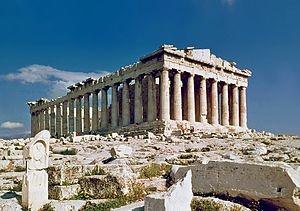
Should “Türkiye” become the official name for country of “Turkey” in English language?

Yok, Mehrdad dostum. İstemiyorum.

Assimilating country names into a target language is something I have a lot of affection for. I don’t regard it as disrespectful, but as familiarising; I regard the alternative as exoticisation. I get greatly annoyed when I hear Greeks speak of themselves in English as Hellenes, or refer to Hellas.

We have six centuries in English of referring to Turkey as Turkey in English (and the -y suffix shows how old the word is in English; it’s not a new word like Serbia or Lithuania). That’s not a bad thing, that’s something to be proud of. It’s history. And respect for a country is also about respect for your history with that country.

What are the best things about your country?

What I would have answered your question about my country (Australia) is largely already in Nick Nicholas’ answer to Do Australians like being Australian citizens?

But I’ll pretend I didn’t already answer it.

Many of the best things about Australia, it shares with the US, and they have a similar reason.

  • The optimism.
  • The social mobility.
  • The relative (relative) lack of sectarian and ethnic conflict.
  • The relative affluence.

In addition:

  • The professed (professed) egalitarianism.
  • The irreverence.
  • The healthy (healthy) skepticism.
  • The relaxed attitude to life.
  • The beaches.
  • Lamb.

The best things about my country (Greece) are:

  • The depth of history.
  • The lyricism of both its high and its popular culture. Which is bound up with its depth of history—and not just its Ancient history.
  • The ability of Greeks to have a good time, at any pretext.
  • The level of political engagement, and political education.
  • The theatricality of interaction between people.
  • The beaches.
  • Lamb.

What are the differences between American and Australian English?

I’m not merging this with What are the differences between American, British, and Australian English accents? , but many answers there already get into this:

Your safest starting point is to take What are the differences between British English and US English? , and triangulate it with What are the differences in grammar between Australian English and British English if any? (minimal), and How can you tell the difference between an Australian and an English accent? Obviously there are many regional differences, but are there any tricks to quickly differentiate? (more). We’re getting some vocabulary from American, and a little bit of spelling (though that’s more the fault of spellcheckers); but Australian English is closer to British than American English overall.

Splitting off complaints about Quora into a new blog

There’s a lot of complaining about Quora in this blog. I’m going to be putting more personal stuff in this blog, so I’ve decided to hive off Quora criticism into a new blog, The Insurgency. I’ll be forwarding existing posts from here into the new blog.