So clearly I’m out of sync with the community norm.
Let me write an answer that addresses my discomfort.
In normal circumstances, questions and answers are an interaction between people, and follow the socialising norms for such interactions. That includes associating respect for a person with respect for what they say, and vice versa. And the social norm is that when someone gives you offence, and you accordingly sever ties with them, you are no longer exposed to contact with them, and you do not exchange social pleasantries with them.
This doesn’t happen here; as Joshua Engel decried in a comment, “block” here doesn’t actually mean “block” (by which I presume he means, “block + mute”).
The result is the question OP poses: blocking yet upvoting.
I’d argue that this is not normal for human interaction (“feels weird”, as Carlos Matias La Borde and Jeff Fuhrer put it). It’s not normal to refuse contact with people and then applaud people. So what’s going on?
Here’s some theories:
Quora discourages treating questions and answers as personal interactions: it has valiantly set itself up not to be social media. Comments are devalued in the interface, and can be turned off. Questions are depersonalised, and are not presented as interactions between two people (Should you thank those that answer your questions on Quora by upvoting and/or using the “Send Thanks” feature?) It becomes easier for people to squash readers like flies, as Steven de Rooij put it, because there’s not a premium on having to interact with others to begin with.
The community you end up interacting with in threads and comments is not your 10 colleagues or your 100 or 1000 Facebook followers; it’s all of Quora. So the bonds of community that reinforce civil social interaction (benefit of the doubt, not having a hair trigger) are nowhere near as compelling.
They are even less compelling for TWs, who are exposed to gajillions of comments, and (being more exposed) encounter many more hostile interactions to begin with.
Because of all of the above, users who are already overexposed to Quora find it very easy to dissociate answers from answerers. Two prominent and argumentative TWs (DS and FW) have said that they don’t even remember who they’ve been interacting with in discussions, and don’t particularly care. Very easy for them to flick the fly with no further thought. And not to think about upvoting something down the road. (It’s a big part of why I avoid them.)
I guess I can understand the reaction. I still resent it. I have the luxury of resenting it because I manage to avoid contentious topics, and am not a TW; I’ve never blocked (though I have muted two people), and I’ve been blocked only twice (Which people on Quora do you believe have blocked you unfairly and why?). So it’s still a big deal to me. (One of the latter has turned up in comments here, as an avowed trigger-happy blocker; and to him I say: do not fricking upvote me.)
But I also resent it because I find the imbalance of the interaction dehumanising. That’s not how people interact anywhere else, offline or online. No, my words are not separate from me. No, you don’t get to hate the sin and applaud the virtue from the same person. If you’re going to take offence at me, and block interaction from me to you, it offends me that you still get to interact with me at your discretion; and an upvote is not an interaction with disembodied words, it’s an interaction with me.
And if I matter so little to you that you don’t even remember blocking me, I don’t want your upvote.
To the extent that Quora Inc has posted official answers on the Using Quora topic, Quora Inc has also been trying to educate users.
Hands up those of you that have never seen either.
What Quora is not doing effectively is steer new users to either of those resources (in fact, force feed them). You get an account, boom, you’re in, good luck. Because the UX orthodoxy is that sites should be self-evident, and all onboarding is a bad thing, apparently. (See also Vogon Constructor Fleet.)
You can’t. Refer How can I see my Quora PeopleRank? PeopleRank values and the PeopleRank algorithm is not divulged, although there are good guesses about what it involves.
And given that Quora Stats has been broken for years, even if Quora did release people’s PeopleRank, you likely still wouldn’t be able to see it.
Joachim Pense is right that it’s neither emergent nor inherent, but selected for by moderation.
However, the extent of humourlessness really varies by topics. Topics inherently select for different balances of the factual and the anecdotal. Survey Question is awash with anecdote, and humour follows it naturally. Where the topic inherently allows for it, a community of practice can develop around prominent answerers, so that there can be emergent humorousness. But I’d argue it’s quarantined.
Some of those polymaths also try to inject levity into answers, so long as they are still providing relevant answers. I think a fair few of them succeed.
A2A by Pegah Esmaili, who is Iranian. And not Persian. So I’m not going to say “Persian”.
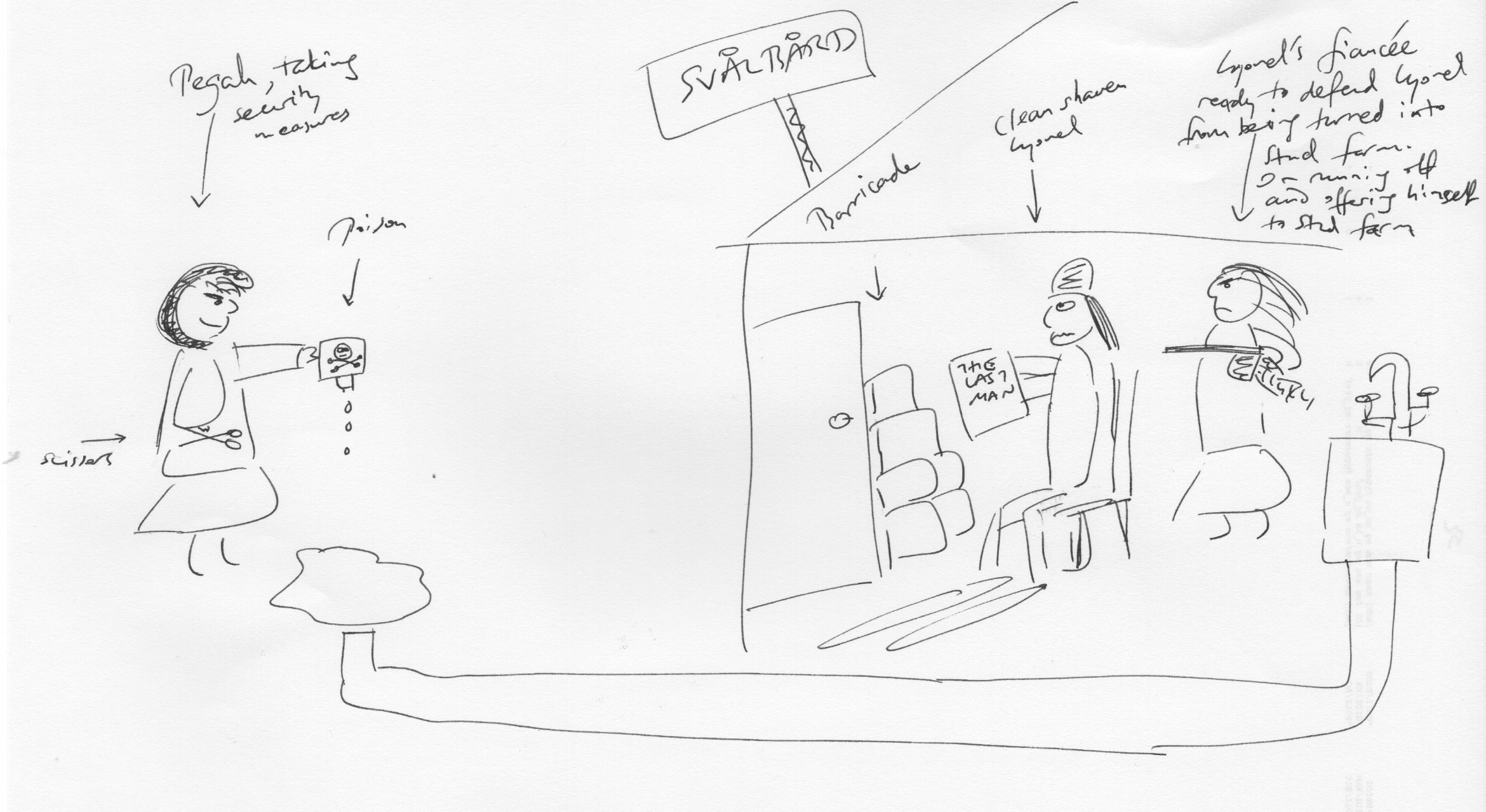
Iranian #1: I am an avid follower of Pegah Esmaili, and her combat boots. And of course I am going to say nice things about Iranians, and Azeri Iranians in particular, because when Pegah starts wiping out all men, I want her to get to Lyonel Perabo before she gets to me.
Iranians? They’re the neighbour’s friend. Or the neighbour’s mentor. Or the neighbour’s coach. Or something.
Which means there’s some things about them that are familiar, and they come as a pleasant surprise. Azeris have an unfair advantage over other Iranians, because they actually speak the neighbour’s language. Persians have an unfair advantage, because they’re Indo-Europeans, and I actually learned two or three words.
Eh, خُدا حافِظ? Did I copy paste that right?
Their vast pride in their history is something I understand, at least intellectually, as a Greek. And they have a majestic culture; they were worthy adversaries to have had 25 centuries ago,
and it’s pretty cool that Greeks (via Ottoman Turkish) use farsi to mean “speak a language fluently”. The Shahnameh is the only epic poem I’ve been able to read all the way through. Their drawings have a filigree delicacy, even if they look strangely Chinese.
There are some things that are alien about them too, sure. The theocracy is scary to me. The mandatory hijab ditto, although the clear halfheartedness with which it is worn in Tehran is a source of ongoing mirth.