Why did people stop writing “A2A” on their answers when they were asked to write them on Quora?

Gee, presuppositions in question details much, Anon?

I worked out that A2A wasn’t a special privilege, granted by people who had sought out my expertise judiciously by evaluating people’s expertise. (Pro Tip: Do NOT look at who got the most votes, when requesting answers. Look at who’s answered the most answers.)

No, A2A was being scattergunned at me, more often than not on subtopics that I didn’t have much knowledge about—or interest in.

Once A2A became not as special, I didn’t treat it as special. I restrict “Thx4A2A” to Quora friends, or to people who I can tell have specifically sought me out.

By all means, people of Quora, keep A2A’ing, just try to target them better. Having a vocabulary of three Farsi words, for example, does not make me a Persianist.

Why do we lose our accents when we sing?

Originally Answered:

Why do British/ Irish/ Australians when singing have the same American accent as American singers?

Brian Collins and Robert Charles Lee, I disagree. They do too. And I do have a tin ear, but I’m not the only one to think so:

And I reckon it’s a genre effect. Pop/rock is American, so non-Americans sing like the Americans they’re emulating. John Williamson (singer), by contrast, does Australian Country with some overt Australian nationalism; and his vowels are, well, True Blue Aussie:

https://youtube.com/watch?v=cohkaLM3AjQ

TISM were suffused to the gills with in-joke references to Australian culture. I got into them when I left Australia, out of nostalgia. I agree you wouldn’t mistake them for Americans, but those are not Australian vowels either, and there’s more rhotic action there than there should be. Because they were doing genre.

https://youtube.com/watch?v=kI-L6vOGkvQ

The two alt-rock bohemian self conscious hippie drongo skip bastard Aussie bands I loathed growing up were Frente! (with exclamation mark!) and Ratcat. The reason I loathed them, apart from being alt-rock bohemian self conscious hippie drongo skip bastards, was that they were among the first Australian acts to make a point of singing pop with an Australian accent:

https://youtube.com/watch?v=XdJYrkra0nk

Sod off, alt-rock bohemian self conscious hippie drongo skip bastards. Give me the grunge stylings of Silverchair any day.

With a mumbly Seattle accent: just right for a bunch of teenagers from Newcastle NSW.

https://youtube.com/watch?v=qPxL5guYmWw

Why wasn’t Greece ever islamified like Syria and Turkey?

Greece was affected: in 1800 half the population of Crete was Muslim, and those were converts, not settlers from Turkey.

There’s a very simple answer to why Greece, and much of the Balkans, did not have the same outcome as Syria or Egypt: Greece was conquered by the Ottomans. And the Ottomans had the Rum Millet. As People of the Book under a stable Ottoman realm, the Rum Millet were second-class citizens; but so long as they paid their taxes, they were largely left alone, and they had some degree of autonomy.

The more interesting question (which I don’t know the answer to) is not Why Greece or Serbia were not islamised, but why Albania and Bosnia were.

Could saying words one phoneme at a time have been a common practice before the invention of written language?

Neeraj Mathur is quite right: syllables, not letters. Some circumstantial evidence for this from Ancient Greek drama. When literacy was a very new thing, and the tools of grammatical analysis (such as words) were still not very popular. (https://www.quora.com/Could-sayi…):

the differentiation between utterance and word was newfangled with the Greek sophists. Aeschylus avoids Euripides’ new fangled distinction in Aristophanes’ Frogs, and sticks with the time-honoured epea, “utterances”—which could be as short as an ouch, and as long as the Iliad.

At the start of Aristophanes’ Knights, Nicias asks Demosthenes to keep repeating molōmen and auto really fast. That makes a pun: molōmen and auto “let’s go (to) it” turns into auto molōmen “let’s run away” (somewhat taboo; more taboo with the characters saying molōmen auto molōmen auto molōmen auto molōmen to the rhythm of jerking off). That displays an awareness of words being part of other words, but not of phonemes.

For “say it quickly”, Nicias says xyllabōn. In non-Attic, that’s syllabōn: “taking it together”. Something that you take together—like, say, a bunch of phonemes, or I’d say, a sound that you take together as a single quick unit—is a syllabē: a syllable.

And the old-timer Aeschylus, who did not want to know about Euripides’ newfangled words, does speak of syllables, and graphemes, and NOT phonemes. Seven Against Thebes, 468:

“This one, too, shouts in syllables of written letters (grammatōn en syllabais) that even Ares could not hurl him from the battlements.”

Letters in Greek are literally “written things”: grammata. You shout in syllables. Aeschylus knows that multiple grammata correspond to a syllable. But he hasn’t quite made the leap to one gramma corresponding to one phoneme—even though that’s why distinct letters exist to begin with. Even if you interpret syllabē as “bundle”, you don’t sound letters out separately.

Similarly, Greek had a word syllabizō for pronouncing the syllables of a word one by one, used by Plutarch. The corresponding word grammatizō, used by the grammarian Herodian, doesn’t mean pronouncing the phonemes of a word one by one: grammata are “written letters”, and grammatizō means “to spell”.

Plato, it’s fair to say, uses phōnē “sound” to refer to vowel sounds as distinct from consonants. So there was the beginnings of an awareness of phonemes in Greece; after all, their alphabet was phonemic. But my hunch is still that it would be Zer-kes’ vs Zer-ges’ new cave, not Z-e-r-k-e-s, that syllabising rather than phoneme-ing was the default.

Btw, in Modern Greek, syllabising combines with phoneme-by-phoneme spelling. The informal Greek alphabet is vowels, and consonants followed by /u/. So Zu-e-ru-ku-e-su (instead of Zeta Epsilon Rho Kappa Epsilon Sigma).
How did certain words become homonyms?

Several ways. Dimitra Triantafyllidou has already answered; I’ll answer as well, a little more schematically, but it’s essentially the same answer.

  • Sound mergers in the language. meet and meat used to be pronounced differently [meːt, mɛːt]; now they’re pronounced the same, [miːt].
  • Sound un-mergers in the language—or at least, a spelling system out of sync with pronunciation. I read it now, I read it yesterday: same spelling, different pronunciations [ɹiːd, ɹɛd]. I’ll include here stress splits like désert (noun)/desért (verb).
  • Borrowing into the language from two different origins; e.g. Dimitra’s example of tire, French and Germanic.
  • Zero derivation: English can form verbs from nouns without adding any extra affixes. E.g. a book, to book.
  • Semantic split (polysemy). What used to be a single word is now considered two different words, because of diverging meanings. Crane as in bird; crane as in machinery.

How is your accent in French? Could you record this extract from “Le Petit Prince” to let us hear how you sound in French?

Lyonel. Lyonel, Lyonel, Lyonel…

je ne parle point Français. But you can have a recording anyway. Especially because I suspect I sound like your worst Languedocien nightmare…

Steven. Steven, Steven, Steven…

… you’ve finally got your third recording out of me. (Or is it fourth?)

Vocaroo | Voice message

How many shots does it take to get you drunk? What does it feel like, when you’re drunk? How do you see around you? How do you talk? What do you do?

We will never find out.

My father conducted a scientific experiment at 19, to determine his answer to this question. He vaguely remembers passing out.

My control issues are much too deeply embedded for me to recapitulate my father’s empiricism. Once I realise that I am affected by imbibing booze, I get annoyed enough at the impending loss of control that the imbibing ceases. Even if it involves quite yummy cocktails, as my birthday degustation on Monday did.

The limit is I think 5 shots’ worth.

The symptoms only get as far as me being slightly more voluble than usual, and an incipient wooziness. No room spinning or nausea or anything like that.

My threshold has dropped since my twenties too. I was capable back then of downing a Long Island ice tea. Already by 35, I was struggling with half of one.

How would I go about making a Latin translator website?

Anon, I commend you on your initiative. I don’t commend you on your question topic tagging; hopefully you’ll get some responses better targeted than this now.

Learn Python.

Not because I have any love for Python. I’d be happy to chain Larry Wall and Guido van Rossum together: each other’s company would be punishment enough.

Learn Python, because Natural Language Toolkit.

Learn the Natural Language Toolkit.

Then get familiar with the techniques of Natural Language Processing. Which you can do via the Natural Language Toolkit. You’ll want to get into stemming. And lexical databases. And if you’re wanting to replicate what Google Translate does, statistical machine translation techniques.

By which time, you’ll have more targeted questions, which better informed individuals can help you out with.

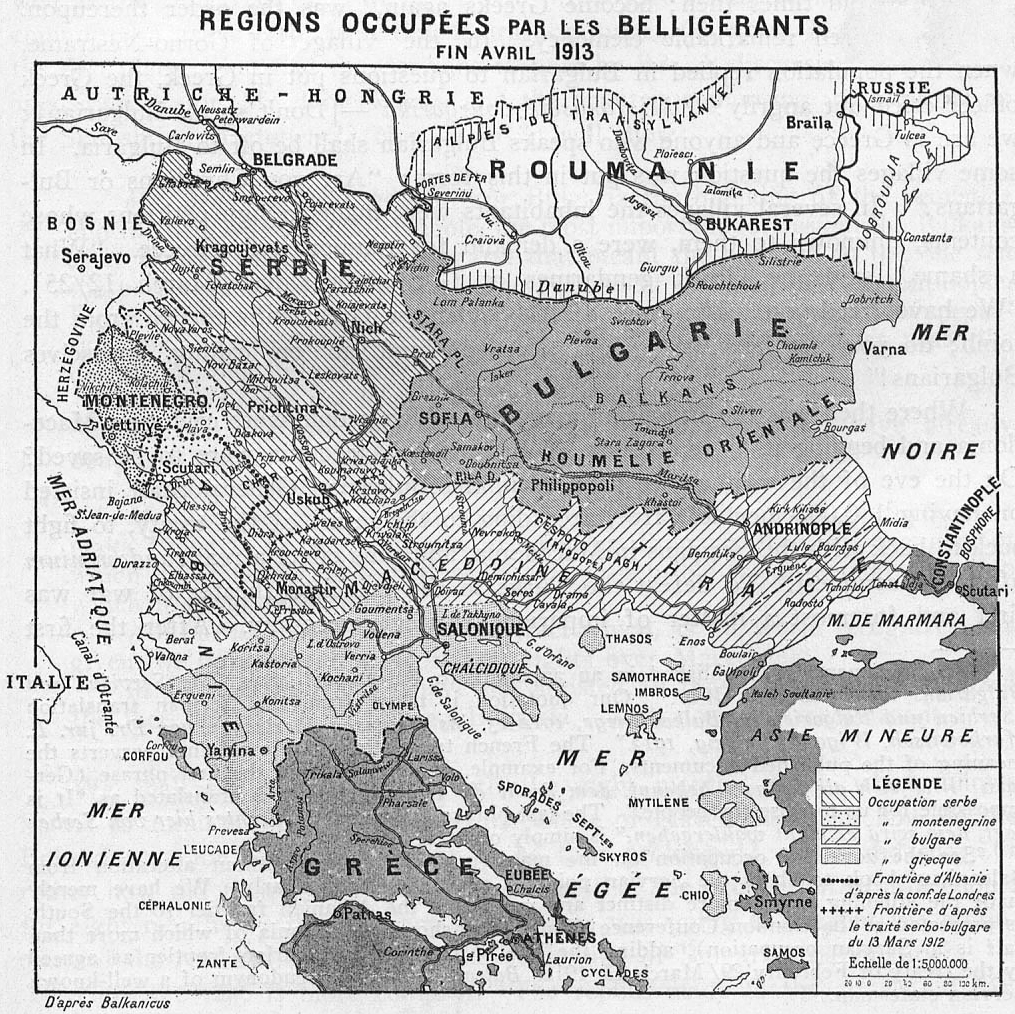
If Konstantinos I of Greece had gone North to take Monastir in 1912, instead of going to Thessaloniki, would the Balkans be different?

Not a question I know much about, but let me take a stab, and see if someone more knowledgeable corrects me.

The Wikipedia article on Constantine I goes on to say:

The capture of Thessaloniki against Constantine’s whim proved a crucial achievement: the pacts of the Balkan League had provided that in the forthcoming war against the Ottoman Empire, the four Balkan allies would provisionally hold any ground they took from the Turks, without contest from the other allies. Once an armistice was declared, then facts on the ground would be the starting point of negotiations for the final drawing of the new borders in a forthcoming peace treaty. With the vital port firmly in Greek hands, all the other allies could hope for was a customs-free dock in the harbor.

In this scenario: Bulgaria takes Salonica, and Greece takes a good chunk of (FYRO) Macedonia. In real life, Bulgaria then went to war with Serbia and Greece in the Second Balkan War, dissatisfied with how much territory it had gotten, and Serbia thought that Bulgaria was reneging on the deal they had before the war on what would happen next.

Balkans after the First Balkan War. Bulgaria has gotten a lot bigger than it was later. In our scenario. Constantine I takes Monastir, and loses Salonique in the process.

Greeks having Monastir and not having Salonica spells even more trouble. I would surmise that the Second Balkan War becomes a three way war rather than a two way war. Any deal between Bulgaria and Serbia would be off. Serbia may well feel more of an imperative to protect the Southernmost Slavs, as Greece is now a lot closer to Skopje. Greece can’t be happy with Bulgarians in Salonica, especially as this likely means even more ethnic Greeks under Bulgarian control (Chalkidiki, as well as Eastern Rumelia).

In the ensuing free far all, Bulgaria is at less of a disadvantage: it may have retained Western Thrace, and it may even have ended up taking a big chunk of Vardarska Macedonia—which would end up with all of geographic Macedonia being Bulgarian.

I dunno. You tell me.

Is Zeus more powerful than Thor?

A question of this profundity deserves a well-considered, thoughtful evaluation.

Such as that given in Episode 3, Series 4 of Epic Rap Battles of History:

Zeus vs Thor

Tell your three headed bitch I say hi

The YouTube audience assessment, FWIW, seems to have weighed towards Thor.