Hiotis vs Hendrix

This is not high Greek culture. This is not even low Greek culture. This is stoopid Greek culture. But I got a laugh out of it, and I’m translating the YouTube comments about it.

In the left corner: Jimi Hendrix. This audience, I assume, needs no introduction to him.

In the right corner, Manolis Chiotis. How do I describe Manolis Hiotis? Well, if Vamvakaris was the Bach of Bouzouki music, Tsitsanis the Beethoven, and Zambetas the Offenbach, then I guess Hiotis was the Paganini. He was a virtuoso, he pioneered the electric bouzouki in guitar tuning, and he was wildly popular in Greek film. But his songs, I dare say, are not the greats of the genre. A few have nostalgic appeal (Περασμένες μου αγάπες, Θεσσαλονίκη μου μεγάλη φτωχομάνα, Ηλιοβασιλέματα), but they’re way too European, and way too light. I love “My Thessalonica, Great Mother Of The Poor”, but on reflection, I think I love it most for that verse. The tune is on the frivolous side, and the intro is actually quite awkward.

The vid says that he was the man who dragged the bouzouki out of the mud, perfumed it, and made it fit for the salon. I don’t think that counts as praise, and I think you’ll find Tsitsanis did that first. Tsitsanis might have been bourgeois, and had no idea what getting stoned was, but at least he had a soul.

That’s not a universal opinion on Hiotis; in fact, it’s bound to be a controversial one. But it’s mine.

Anyway. Here’s a YouTube vid, made by Greek government TV no less, about the urban legend that Hendrix ran into a show by Hiotis in New York (supposedly in ’65, which would have been before anyone cared what Hendrix had to say; user Voodoochile79 offers it was supposed to be ’69), and stated that he may have been the best stringed-instrument player he’d ever heard. Mary Linda, Hiotis’ wife and musical partner, is interviewed to corroborate it. I think the vid hints that Hendrix even learned his technique from Hiotis; I dare not play it in full to find out.

https://youtube.com/watch?v=eNaOBlGAUu8

“Hendrix says X is a better guitarist than he is” is an exorbitantly widespread urban legend (Phil Keaggy Greatest Guitarist?); this, I guess, is the Greek variant. The origin of the urban legend is the alleged exchange from 1969 “How does it feel to be the greatest guitarist?” “I don’t know, go ask Rory Gallagher.”

If there ever was a kernel of truth to this, which is extremely doubtful, it may be in what user SUNBLESSED ATHENS reports in comments there:

Ο Χεντριξ το ειπε οπως εκανε και αλλα παρ ομοια σχολια για πολλους ανα τα χρονια.Απλα δεν υπαρχει καταγεγραμμενο ντοκουμεντο για την δηλωση του οσον αφορα τον Χιωτη.Όσον αφορα την ΑΛΗΘΕΙΑ…διαβαστε να σας την πω εγω, Λοιπον.. αδελφος του παππου μου που ζουσε εκει χρονια αναμμεσα σε πολλους καλεσμενους σε εκδηλωση ηταν εκει..στο Αμερικα..και το ακουσε ο ιδιος..απο τον πιτσιρικα νεαρο κιθαριστα ο οποιος σε μπλα μπλα..με δημοσιογραφους και μουσικοφιλους ειπε κατι σαν.. ”That Greek guy from the other night..(ειχε παιξει ο Χιωτης 2 μερες πριν)..was really good..i think he is the prob the best.!!Ισως μεταξυ σοβαρου και αστειου

Hendrix did say it, and he made similar comments about a lot of people over the years. There’s just no documentary evidence of him saying so about Hiotis. As for the truth: read on. So, my grandfather’s brother, who lived over there in “The Amerika” for years, was invited to a reception, and he heard it himself from the kid guitarist, who in the middle of some yadda yadda with journalists and music fans said something like, “That Greek guy from the other night” (Hiotis had played two days before) “was really good… I think he is probably the best.” Possibly as a half-way joke.

Maybe.

At any rate, there’s such concentrated win in the comments, that I think I should be relaying some of it in English.

Not the stuff by people who actually believed the video. That’s depressing. Or people who actually say that Hendrix wasn’t all that, because he wasn’t a virtuoso shredder like Hiotis or Malmsteen. That’s even more depressing. And expressing incredulity about the video is shooting fish in a barrel. But after the week I’ve had on Quora, I’ll take it. Even if most of the commenters are Hiotis fans.

Chronological order. The mockery only starts a year after the initial post.

  • alucardae86: This show is in the same style as the 8 pm news: misinformation at its peak. The four-string bouzouki was not invented by Hiotis, it existed since 1912. Hendrix was never known for his speed or his crisp tone, but for his technique and his pioneering sound (corresponding to our Vamvakaris). As for his statement, that’s an urban legend that has circulated about various artists of the time. PS: Hiotis belongs to the pantheon of bouzouki players.
  • markos aggelos: Hi guys this is my comment. Hiotis is a master musician and I don’t want to take anything away from him a master musician. But Hendrix at that time was in the military from what I know. So the hypotheticals of Greek TV are as always a bunch of crap. Don’t watch TV guys they’ve stuffed us full of bullshit what a great scene they’re painting, two giants sitting back having a little glass of wine and playing Voodoo Chile haha. What next he taught him how to use a wah wah pedal too.
  • Nick Parastratidis: “He took the instrument out of the mud of the suburbs and placed it in the salons of the aristocracy.” Repulsive. He praises Hiotis, but insults his origins and the origins of all rebetiko. Historical inaccuracy coupled with vile snobbery against generations of people who grew up in the “mud of the suburbs.” Shitty little journalists.
  • John Maronidis: You do know it is possible to listen to more than 1 kind of music right?
  • GreekMoonraker008: SO IS AN ARTIST ONLY ANY GOOD IF AN AMERICAN APPROVES YOU RIIIIIGHT? YOU DICKHEADS FUCK YOUR SOUL! SO BECAUSE HENDRICKS SAID HE IS GOOD THATS WHY EVERYONE ADMIRES HIM RIIIIIGHT? THATS HOW LITTLE FAITH ALL GREEKS HAVE RIIIIIGHT!
  • Vlad Count: Mine used to play the accordion with Metallica for many years
  • Greek Bouzouki: I am sad to say that the things that impress people are the things that shouldn’t. Hiotis is not great because he impressed Hendrix, or because he played the guitar upside down, or because he played fast.
  • Dimitris Skazas: The observation made by many that this is an urban legend is accurate, and if I may say so, obvious. It regularly involves many virtuoso soloists, usually with little thought. Moreover, I do not admit the need of such comparisons between artists belonging to distinct cultures. It is true that once, in a much later interview, Mrs Linda reprised the legend, pretty much trapped into doing so by a journalist who mentioned it to her as a given, but also with some naiveté that I do not begrudge her. This confusion (not comparison) between Hiotis and Hendrix, if I may say so, is somewhat pathetic.
  • ΣΤΑΥΡΙΔΗΣ ΙΩΑΝΝΗΣ: A wonderful documentary. Only Greek State TV does such quality work BRAVO. [Poe’s law applies here]
  • mpelefroni: Hiotis at the time was known by the nickname “Rory
  • Παναγιώτης Μήτσου: Neither Gallagher nor Hiotis. (Haha, you found a video with Gallagher, you say.) [In response to someone who claims to have seen a video of Hendrix saying it about Gallagher.]
    […]
    There is a version [of the urban legend] circulating with Hiotis (Linda must have circulated it), a version which fits our national collective fantasising perfectly. And of course plenty of Greeks rush to reproduce it with wondrous ease and satisfaction. They even claim that the interview had been recorded and that they have seen it. And they’re proud of it, as if, had Hendrix actually said that Hiotis was a better guitarist than him in some parallel universe, that would be reason enough for them to feel proud themselves. Hullo barefoot family.
    • kostasaliver: And even if that is true, buddy, why ruin it? Myths are there to be preserved.
Why I’m still here and not on Medium

At Kat’s prompting, I’m writing a positive rather than negative essay, on what keeps me on Quora, and I invite you all to do the same; it will help us put our disgruntlements into proper context, and enable a better cost–benefit analysis for us.

Done as a video, because I have a headache. You guys don’t have to do so. Posts here welcome.

Does the Georgian word ‘portokhali’ come from the Greek ‘portokali’?

As Konstantinos Konstantinides says, no, both come, likely independently, from words for Portugal:

Orange (fruit) – Wikipedia

As Portuguese merchants were presumably the first to introduce the sweet orange to some regions of Europe, in several modern Indo-European languages the fruit has been named after them. Some examples are Albanian portokall, Bulgarian портокал (portokal), Greek πορτοκάλι (portokali), Macedonian portokal, Persian پرتقال (porteghal), Turkish portakal and Romanian portocală. Related names can be found in other languages, such as Arabic البرتقال (bourtouqal), Georgian ფორთოხალი (p’ort’oxali), Turkish portakal and Amharic birtukan. Also, in some of the Italian regional languages (e.g. Neapolitan), an orange is portogallo or purtuallo, literally “(the) Portuguese (one)”, in contrast to the Italian arancia.

In what ways are Albanians in Greece mistreated?

My answer to this is a historical anecdote, but the quite informative answers here do talk about what happened in the 1990s, as well as what’s happening now.

The reports now are that Albanians are on the top of the totem pole of immigrant privilege. They are of course still below Western Europeans, who are treated as a separate category entirely—though I’m not sure if Greek goes as far as English, to have a separate word like ‘expat’ for them. Albanians now are well-regarded, as householders (νοικοκύρηδες) and small-businesspeople, even if they are still often regarded as the hired help rather than equal members of society.

I’ll add an anecdote from 1995 that left me puzzled.

I was in Greece for six months, doing archival research for my PhD, and staying with relatives. At the end of the first three months, I had to go to the local immigrant processing centre, to renew my visa. (I am an Australian citizen.)

The courtyard of the centre was chock-a-block full of Albanians, waiting to be processed for the holidays. None of them was being processed, and noone was going inside. I am Australian, so I believe in queues; so I hung about for maybe an hour, trying to listen in on the Albanian all around me. (From linguistic research, I knew a bit, though certainly not enough for listening in to work.)

After a while, one of the Albanians turned to me and said (in flawless Greek):

—You’re not Albanian, are you.

—… No, actually, I’m not.

—Well what are you waiting with us for? Go to the front.

… I guiltily skulked to the front. The doorman said:

—You’re not Albanian, are you.

—… No, actually, I’m not.

—Well what are you waiting with them for? Go inside.

Thinking back, it may well have been that there was no queue, and there was a designated Albanian processing time. Still, the fact that Albanians themselves pushed me to the front of the queue was something I found chilling.

What does the following phrase that I heard several times in central Greece mean, “tha paw na koitasthw” (“θα παω να κοιτασθω”)?

Dimitris Sotiropoulos reports in his answer that in some areas of Central Greece, this means “I will go to bed”. The normal meaning of the verb in modern Greek is “to look”, but the current accepted etymology of the verb is indeed from an ancient Greek verb for “to lie down”. This was not always the accepted etymology (it’s not terribly obvious, after all), which is why the verb used to be spelt as κυττάζω rather than κοιτάζω.

Dialects are often repositories of archaism, of course. In Cretan, “to lie down” is θέτω, a remodelling of ancient τίθημι “to set” — the meaning the verb was revived with in standard Greek.

OP’s expression will remind most Standard Greek speakers instead of the idiom να παίζει να κοιταχτείς, “you should go and get looked at”. Meaning “you’re crazy”. (The person who implicitly will do the looking at you is a psychiatrist.)

Why are so many people upset that Quora removed the question details?

There are consistently changes in functionality without warning on Quora; the roll out of new anonymity was the only exception recently. Of course, if you don’t know about the blog Quora Product Updates, that doesn’t make much difference.

(There was warning about this change from German and Italian Quora, which had no question details from the beginning, but few would have been aware of it.)

There is always much push back against sudden feature changes. But this time was quite unusual, even before Bad Hombre Bot (as Viola Yee called it), the spurious attribution of question details to whoever last edited them. The pushback included a lot of high ranking users, including users that normally defend Quora. The Top Writer Facebook lounge was baying for blood, reportedly.

The severity of this time is less to do with the suddenness of the change, I believe, and more with how it impacts users’ aims for using the site. This was not just a UX tweak: this went to the core of what Quora is used for.

And remember: users use any website for their own purposes, not for D’Angelo’s. Hence me alluding in comments elsewhere to Die Lösung.

A lot of question askers needed details to make the answer useful to them, whether because of personal particulars, or because of of the specificity of the question.

Question details are not necessarily as salient to those writing an answer, particularly as many of us use questions as prompts for writing rather than as pleas for assistance. But clearly, a lot of users really do treat questions as the latter. So the change got in the way of them feeling they were able to be helpful.

Even those that weren’t as invested in those two aims were surprised at such a disruptive change. The Mantra of Reusable Questions was known, but many questions ignored it in practice, and most users didn’t mind it being ignored, given the two benefits I’ve mentioned. This change was not just an annoyance: it was a reduction in users’ freedom of action. Even if they weren’t going to make use of it, users aren’t going to like that.

The changeover was handled abysmally, and should be a classroom example about how not to do things. (Much of how Quora does UX is, as Leonid S. Knyshov once mused.) But it’s the nature of the change, not its implementation, that made the uproar truly generalised this time.

Why is “cunt” considered very offensive in the US but not in Australia?

Originally Answered:

Why is the word ‘cunt’ so offensive in America?

Because in America, as distinct from the Commonwealth, cunt is a reductive description of women, when used as an epithet. In the Commonwealth, the epithet mainly refers to men. It is certainly strong, but it can and is used jocularly, and even as a coarse affectionate term (if qualified with an adjective: e.g. clever cunt).

So in the Commonwealth, the word violates one taboo, and a minor one at that nowadays: sex. In the US, it also violates the much more salient contemporary taboo of misogyny.

Alix contra Bodnick

From René Alix, comment on my repost of Bodnick predicting demise of Wikipedia. Several insights I think deserve wider readership.


https://insurgency.quora.com/May…

A lot of smart people I know feel the way I do, but aren’t willing to say so publicly.

I see; “lurkers support him in email” <scoff>; smart ones too, not idiots like the rest of us. You’d think Wikipedia had imposed a totalitarian state upon us all and Bodnick was leading the underground intelligentsia.

Pretty ridiculous notions about people not daring to say anything bad about Wikipedia, when a simple search shows exactly the opposite. Sure, there are apologists who will defend anything; Quora has plenty of those itself. But AFAIK various Wikipedia critique has pretty much been constant and wide spread, for years — and nobody I know is afraid to say anything. I am certainly not. Heck, Wikipedia has comprehensive pages about it: Criticism of Wikipedia. People have written papers on it, done academic studies. After all, what can Wikipedia do stop us; they have zero power over us.

IMO Wikipedia is somewhat better now than it was 10 years ago. I don’t see the degradation. It also has scale, which means editors who burn out are replaced by new ones (though it could certainly do even better at retaining editors; the rules are byzantine). And no, I am not an apologist; I find Wikipedia extremely useful (much more useful than Quora, which is IMO never going to be a replacement), but I am not at all blind to its shortcomings.

Innovation is great; most of my life I’ve worked at the cutting edge of it, in the service of creating better software for users who are themselves at the cutting edge of entertainment (in film and games). But innovation just so you can brag about being innovative, innovation for innovation’s sake? Not so desirable. Serious users don’t like that sort of thing in their UX. They do in fact resist it; hard. And if you develop software people pay a lot of money for, you notice that real quick. Quora seems to do too much innovation for innovation’s sake (excepting the AI aspects). I don’t see them doing much for the experience of their actual users at all, rather I see them ignoring most of the common complaints in order to futz around with aspects that nobody I’ve ever seen has requested any change on. If they actually had to make money from selling their product to their users, they’d be singing a different tune. The lack of communication with users in itself is pretty disastrous when it comes to innovation that is supposed to help the user. Quora doesn’t even obey the most basic rules. Keeping people perpetually off balance is not innovative.

But we already know who the real customers are — not the users — so it all makes sense. Razzle dazzle buzzwords draw investors and advertisers.

In fact one of the most successful aspects of user experience in recent years has been gamification. But Quora has removed some of its own and hasn’t replaced it with anything fun — the credit system is gone, and the only things left are the Quill (out of reach for most of us, for which the rules are arbitrary; never a good thing), upvotes/downvotes on individual answers (about which we are not fully informed and which are impossible to keep track of), and followers (this is probably the most “true” metric, but I can’t say it does much for me (might need to unpack why not some time)). All of Quora’s assessment that goes into how high our answers float is completely hidden.

I was just reminded of how ridiculously motivating it can be to gather points and levels/badges (if I understand exactly how I’ve earned them) when I started answering questions on TheQuestion and Fluther, both of which have reputation scores. I know how silly that is, and still it motivates me. Fluther also has levelling of sorts. All very cute, probably too cute for the more academic of Quora’s users, certainly a bit twee for me, but it makes me feel oddly cared for, particularly in contrast with Quora’s complete disregard for me as a person.

Bodnick vs Nicholas: the wager

https://www.quora.com/What-did-M…

Nicholas:

I’ll reiterate what I said under your cited answer here. It’s a truism that all online communities run out of steam. Including this one. Despite how much the UX does or doesn’t innovate.

When the company goes to war with its users as often as Quora does, that might limit the community’s shelf life whatever twiddling to the UX they do. But you’re betting on more new writers coming in than old ones flaming out, and so far, it’s worked.

Your answer claimed that Quora will do better than Wikipedia, because Quora keeps innovating in its UX. (Some of us naysayers have more colourful ways of describing what Quora keeps doing to its UX.) Well, Wikipedia predates Quora by a decade. Let’s talk about Quora in a decade, Marc.

Bodnick:

Seems like there is a handsome opportunity to create value. Want to make a wager?

Nicholas:

You’re on. 100 USD, 2027–08–09, that Quora will have less Alexa share then than now.

I will likely not be on Quora by then, but I am betting that Google still will, so: opoudjis at Gmail

Bet’s off if Quora is acquired. I win if Quora no longer exists. And I’ll pay up if I’m wrong.

Bodnick:

I’m in.

Nicholas:

I’m forwarding this exchange to The Insurgency, because I want witnesses.

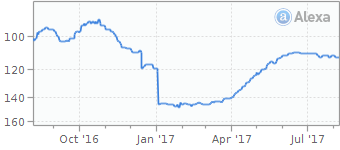
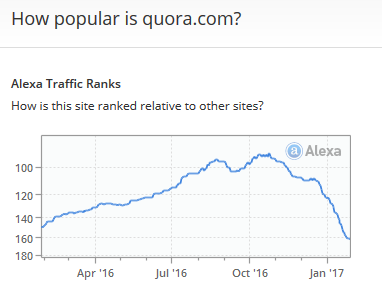
EDIT: Current Alexa ranking of Quora: #112.

How do Greeks feel about the hadith analysis by Imran Hosein that the “Al-Rum” of the end times is to be analysed as Russia?

Having listened to 6 mins of Sheikh Imran N. Hosein’s lecture, and done some Googling:

There is a Hadith that predicts that, in the end times, the “Rum” and Islam will form a truce to fight a common enemy, before they fight each other in Armageddon. To cite the hadith:

Conquest of Constantinople

You will make a firm truce with the al-Rum until you and they wage a campaign against an enemy that is attacking them. You will be granted victory and great spoils. Then you will alight in a plain surrounded by hills. There, someone among the Christians shall say: ‘The Cross has overcome!’ whereupon someone among the Muslims shall say: ‘Nay, Allah has overcome!’ and shall go and break the cross. The Christians shall kill him, then the Muslims shall take up their arms and the two sides shall fall upon each other.

At issue is the identity of Rum in Islamic eschatology.

Rum in Muhammad’s time meant the Christian Empire that Arabs were familiar with, i.e. the (Eastern) Roman Empire.

The conventional interpretation is to identify Rum with Christendom. So Islamic eschatology – Wikipedia summarises this prophecy, among the minor signs of the End Times, as:

The truce and joint Christian-Muslim campaign against a common enemy, followed by al-Malhama al-Kubra (Armageddon), a Christian vs. Muslim war.[29]

Hosein advocates a narrower identification of Rum as Orthodox Christianity, being the continuation of the Constantinopolitan Christianity that Muhammad was familiar with; and since Rum has to be a state capable of waging war rather than a religious community (a concession he makes to modern-day political realities), he thinks it is the preeminent state of contemporary Orthodox Christianity, namely Russia. (When would the Muslims make and alliance with Rum, Is Rum the Rome in Italy?)

Predictably, there is much flaming online, with others insisting that the reference has to be to the religious entity based in Constantinople, the Eastern Orthodox Church. (Hadith : Muslims to form alliance with Rum.)

Now that we’ve worked out what Hosein is referring to: the question is, how do Greeks feel about this?

I enjoyed researching this; you may not enjoy reading the answer.

Non-Muslim Greeks don’t care, because they don’t believe that the hadith of Islam are prophetic of the end times. I mean, seriously. And to the extent that they are even aware of the hadith, they would be quite happy for Putin or Trump or any other putatively Christian state to have to deal with whoever this pre-Armageddon common foe is, rather than shoe-horn the Greek military into this mess. Sure we claim to be the inheritors of Byzantium, but that’s one context we won’t be eager to inherit.

Yes, that’s a flippant response; but please. Non-Muslim Greeks won’t care, any more than Muslims should have to care about Christian eschatology and who the Great Whore of Babylon is meant to represent.

The interesting question is, what do *Muslim* Greeks make of the hadith. Muslim Greek citizens of course exist, but given the history of the Ottoman Empire and Balkan nationalism, the majority of those citizens who are not ethnic Greek are not going to be that interested in claiming the heritage of Rum either. Ethnic Turks or Pomaks in Greece may well reflexively think (Orthodox Christian) Greece when they think Rum, because Rum is the Ottoman term for (Orthodox Christian) Greeks. Still, ethnic Turks or Pomaks in Greece would be no more convinced than their Christian compatriots that the Greek army is plausibly going to play a major part in any prelude to Armageddon. The realities of the modern world would have convinced them that the Rum of Armageddon can’t be the people they think of by default as Rum.

That leaves the very small number of ethnic Greek converts to Islam. They do exist; I had the cognitive dissonance of meeting one at a colleague’s Muslim wedding. No, I am not proud of having had cognitive dissonance. And I hate to say, any ethnic Greek converts to Islam, having been brought up in the thought-world of Christian-aligned Greek nationalism, will have plenty of cognitive dissonance of their own to deal with. They wouldn’t seek to add to that, by reading their compatriots into that hadith.

There’s some bestial fools in Raqqa right now (I wonder if calling ISIS that counts as BNBR?), who think their infamy is justified because they’re hastening the End Times. Even they, I suspect, think Rum is either Putin or Trump, rather than Greece.

They seem to have forgotten that bit about allying against a common foe, too.