How do rural people dress/look like in your country?

If you’d asked this question 100 years ago, Pegah, I could give you an interesting answer. Then again, if you’d asked this question 100 years ago, you would have been my sworn enemy, and there’d have been no Quora to ask me this through anyway.

Australia:

Australia is absurdly urbanised, and those of us in the cities really don’t know enough about those of us in the country—even though our national mythology is all about how the country is where the Real Australians are.

We do know they listen to country music. We know that they wear jeans even more than urban Australians do.

And we know they all wear hats.

You can tell Lee Kernaghan is a Real Australian. He’s a country singer. And he wears a hat. A real Australian Akubra hat.

McLeod’s Daughters all wore hats (some of the time). It was a soap set in the country, with empowered female leads. Who wore hats some of the time. And jeans.
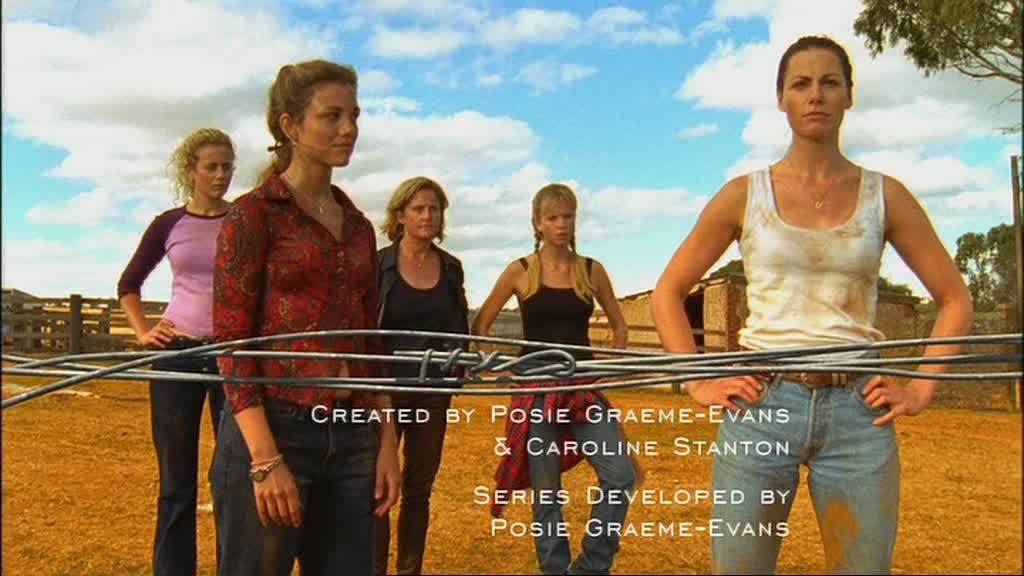
… This *is* safe to show in Iran, isn’t it? 🙂

I haven’t seen many hats in country Victoria. But I don’t think country Victoria is where the Real Australians are. It’s more the fine food and wine provedore for Melbourne, where urban Australians go to eat nice things. (And it’s a provedore, because that’s the kind of snobs we are.)

The hats seem to be more a NSW/Queensland thing. With sheep stations. And a Wide Brown Land. And Country Music.

The agrarian populist politician Bob Katter is from Queensland. He always wears a hat:

Alas, I am an effete urban Australian. The closest I’ve ever come to wearing a Real Australian hat was when I was in Texas:

Howdy pardner.

How does the character of Nasreddin Hodja change across different Muslim countries?

Greeks got him from Turks; he’s much bigger, I noticed, in Cyprus than in Greece. I don’t know enough to compare with Nasreddin in Muslim countries, but in Greek accounts he’s a promulgator of often absurdist folk wisdom. “The argument over the mattress” is a journalistic cliché in Greece.

The argument over the mattress?

Glad you asked.

One night, two people were arguing outside Nasreddin Hodja’s house. Nasreddin got fed up with the fighting, and at his wits’ end, he threw his mattress at them to shut them up.

The two people promptly ran off with his mattress.

Nasreddin returned back to his wife.

“What was that all about?” she asked.

“Oh, they were arguing over who’d get the mattress.”

Some consider Shostakovich very uneven in the quality of his output. What pieces are considered of poor quality, and why?

Opprobrium is usually directed at the made-to-order Stalinist cantatas and film music. See for example Putting the Stalin in Shostakovich: pro-Soviet cantatas cause outrage. They are regarded as insincere, bombastic, and forced on him. People in the West know that they weren’t the kind of thing he took pride in, and prefer to ignore them.

I haven’t heard them, because, well, ditto. I’ll queue them up in YouTube today.

What do Greeks think of Aristidh Kola (Αριστείδης Κόλλιας)?

I was not aware that he’d died. I was even less aware of the conspiracy theories about his death.

I’d come across his books when I was looking at Arvanitika for my linguistics thesis. (My stuff on Balkan language contact ended up left out of the thesis, but I’m grateful for the opportunity to learn about Arvanitika and Aromanian.)

What I thought of him? Amateur, as I think of all Pelasgianists. Eager to prove his loyalty to Greece, like pretty much all Arvanites; I’m surprised from Aristidh Kola – Wikipedia to read that he was as Shqipëtar-friendly as he was. (I’m using Shqipëtar to mean Albania/Kosovo Albanian.)

What do I think of the conspiracy theories? Implausible. But I would think that.

What if sign language was compulsory in schools in the same way that English, science and maths are?

Then we’d be properly acknowledging sign language speakers as our fellow citizens. Hell, even exposure once in your schooling would help with that.

And I’d be able to borrow my deaf neighbours’ ladder without them them shooing me away because they assume I’m a salesperson. (It happened the once.)

Plus, a lot more parents would use sign language with their hearing babies, because they can’t wait until they develop the motor skills to speak.

What do you think about making readers explain an answer downvote?

I would like the option of a radio button on why the downvote. There’s room between downvoting and reporting, and I’d love to see the feedback. Srsly.

Like Peter Flom said, the downvote can mean anything. Including “I don’t want this answer in my feed, even if there’s nothing wrong with it.”

What do you think about people who disagree with you in the comment section for your answers?

It is part of both my privilege and my personality that I don’t often get comments that are anything more than polite disagreement. I make a point of avoiding answers or comments that would expose me to anything worse; and my privilege means that I rarely get dragged into anything worse.

There are topics around Quora that could expose me to age-old hatreds in the Balkans. But I’m not here to yell at or be yelled at by Turks, for instance. I’m here to share knowledge and learn from them. And it’s been great!

That privilege and personality combo means I dislike comment blocking (I’ve just vented about it), and am shocked at comment deletion. So, when I saw Jae Alexis Lee’s at the top of the answers stack, I braced myself…

… and once again, found myself nodding along with her at each point. If I was in her position, I’d be likely doing the same. I think my repertoire would be closer to Stan Hanks’, but then again, Stan Hanks has the same kinds of privilege I do, so I don’t know.

Polite disagreement is awesome. It is a learning opportunity, and I welcome it. There are several Quorans who don’t let me get away with facile statements (top of my list are Dimitra Triantafyllidou and Clarissa Lohr), and I am grateful to them that they don’t. I don’t edit my answer to reflect it, unless there are outright errors of fact; but I want people reading my answers to read the comments.

I’ve had one or two users get more in my face over the year; I’ve almost always ignored them, like Stan Hanks does (“feel free to have the last word, it should be obvious which of the two of us is nuts”). But there was one user I debated with. The guy got pretty unhinged (Dimitra, that was the guy you said would get a lawsuit in real life), but I wasn’t prepared to let him go, since he was posting on topics of my core scholarly competence. I was slightly peeved, but I remained quite polite, and I insisted in pointing out where I disagreed.

And it was remarkably civil outside of those comment threads. I think the guy appreciated the attention. In any case, he was only here for a week.

What languages and dialects are spoken in Corfu?

Greek. Heptanesian dialect, which is rather close to Standard Modern Greek.

A hundred years ago, Judeo-Italian and Judaeo-Greek.

Two hundred years ago, Italian (Venetian) among the nobility.

I’ve seen no evidence of Albanian ever spoken in Corfu.

What words/phrases in your language have funny, beautiful or weird direct translations into English?

Originally Answered:

What expression from your language would English speakers find really funny if translated word for word?

Ah, you remind me of the Golden Treasury of Greek-English expressions: we have not seen him yet, and we have removed him John

I posted an analyses of a few of these on my Greek linguistics blog in 2010: Ἡλληνιστεύκοντος

  • Don’t you defecate us you and your cricket: Δεν μας χέζεις εσύ και ο γρύλος σου! = I rebuff your expression of concern. (Actually: Take your car jack and shove it, alluding to an old joke.)
  • We have not seen him yet, and we have removed him John: ακόμα δεν τον είδαμε, Γιάννη τον εβγάλαμε. = We rushed to a conclusion. (Actually: We haven’t even seen the baby yet, and we’ve already come up with the name John for it; ‘remove’ = ‘take out, publish’.)
  • Eye-removal beats name-removal: Κάλλιο να σου βγει το μάτι παρά το όνομα. = Better your eye be poked out than your reputation.
  • Will I extract the snake from the hole; Εγώ θα βγάλω το φίδι από την τρύπα; = It’s a dirty job but someone’s got to do it.
  • He doesn’t understand Christ: Δεν καταλαβαίνει Χριστό = He does not understand common sense (Actually: “He doesn’t understand any Christ” = “Christianity” = “what is self evident in our culture”)
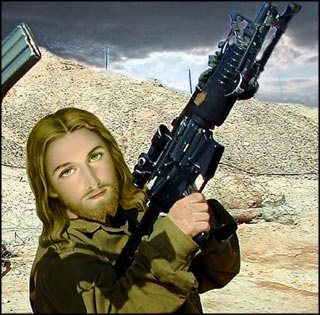
  • He saw G.I. Christ: Είδε τον Χριστό φαντάρο = He is so terrified, he is hallucinating.

  • He cannot crucify girlfriend: Δεν μπορεί να σταυρώσει γκόμενα = He can never get a girlfriend (Actually, “make the sign of the cross over, as a blessing” = “thank his lucky stars that he finally got one”)

There are funnier ones, those are just the ones I’ve published analyses of…